China's' Space 180 'experiment successfully achieves its predetermined goal
At around 11:15 am on December 14th, four volunteers walked out of the "spacecraft" located in Shenzhen one by one and warmly embraced their family and friends who had been away for 180 days. The integration test of the 180 day controlled ecological life support system for four people in China's Green Air Interstellar has been successfully completed.
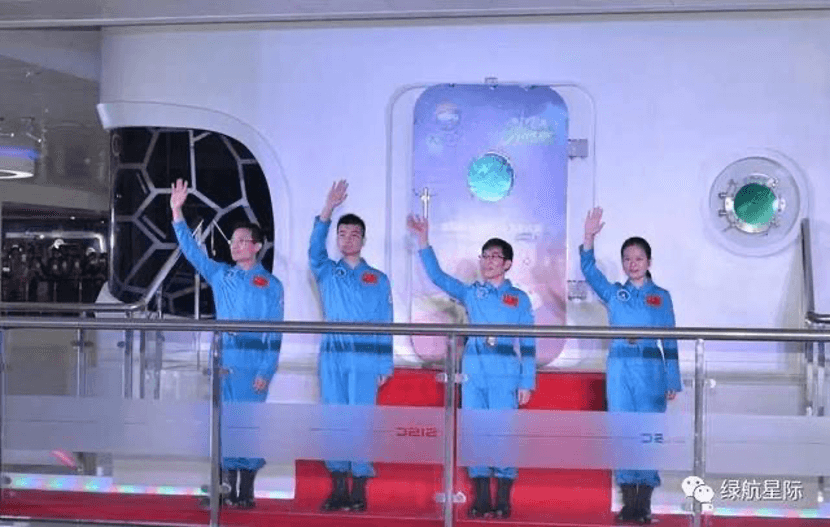
Four volunteers stepped out of the cabin, ending a 180 day journey through the stars. Source: Green Air Interstellar
Shenzhen, December 14th (Xinhua) - At around 11:15 am on the 14th, four volunteers walked out of the "spacecraft" located in Shenzhen one by one and warmly embraced their relatives and friends who had been away for 180 days. This means that the integration test of the 180 day controlled ecological life support system for the four members of China Green Aviation Interstellar has been successfully completed.
Li Yinghui, Deputy Chief Designer of the Chinese Manned Space Engineering Astronaut System and Head of the "Space 180" Test, said that the test successfully achieved the predetermined goals and deepened China's understanding of the third-generation space environmental control and life support system.
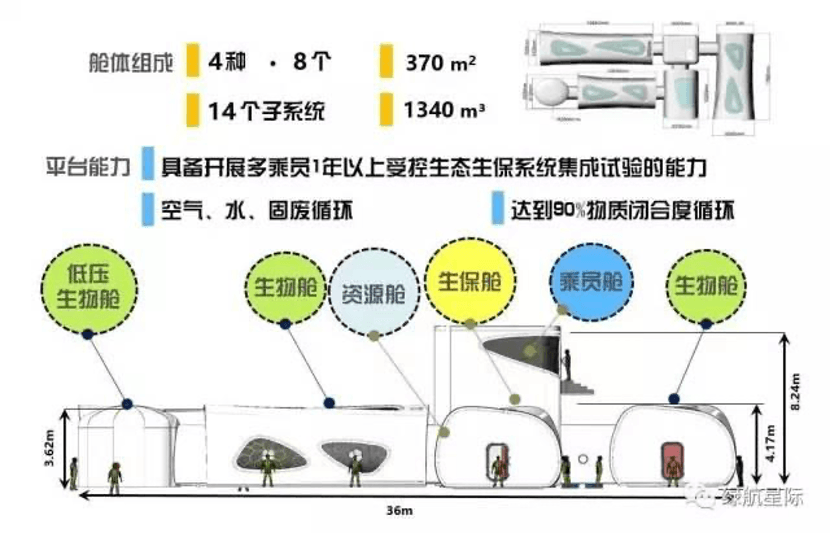
The cabin structure of the "Space 180" experiment. Source: Green Air Interstellar
Experts say that the first generation of environmental control and life preservation technology refers to the complete reliance on ground supply of oxygen, water, food and other life preservation materials, while the second generation of environmental control and life preservation technology refers to the regeneration cycle of atmosphere and water, and the need for food supply. The former has been applied to the Shenzhou spacecraft, while the latter is currently being used on the International Space Station.
The third-generation environmental control and life support technology is suitable for future human exploration of extraterrestrial bodies, achieving manned space missions on the surface of extraterrestrial bodies. This technology provides humans with the atmospheric environment and life support substances needed for survival through artificially established closed and controlled ecosystems.
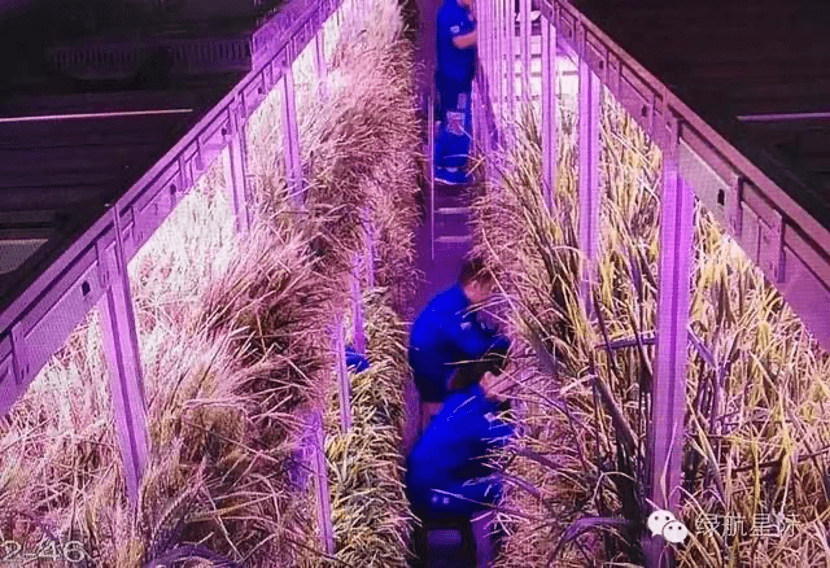
The plant compartment of the "Space 180" experiment. Source: Green Air Interstellar
According to Li Yinghui, four volunteers entered a sealed cabin covering an area of 370 square meters and a total volume of 1049 cubic meters on June 17, 2016. The material closure inside the experimental module was relatively high, with oxygen reaching 100%, water reaching 99%, and food reaching 70%, all of which met the experimental goals. The dynamic balance control of material flow in the manned experimental system was also completed, opening up a new situation for the pre research of life support technology for future extraterrestrial planetary bases.
Li Yinghui stated that the experiment carried out verification of food and nutrition security, living security, hygiene system, and work and rest system for medium and long-term resident missions, further studied and understood the physiological, psychological, behavioral, and ergonomic characteristics and rules of volunteers under specific closed conditions for a long time, and completed technical verification and data accumulation related to space station projects such as psychological support for medium and long-term flight conditions, medical supervision and medical insurance, and management of daily necessities, providing strong technical support for China's space station missions.
Four volunteers, three males and one female, Tang Yongkang and Tong Feizhou are scientific researchers from the China Astronaut Center, while Roger and Wu Shiyun are publicly recruited by the society. They are currently in good condition and will undergo a one month medical examination.
The test was organized by the Southern Academy of Space Science and Technology, supported by the Chinese Astronaut Center, and participated by 9 domestic institutions including the Ecological Environment Research Center of the Chinese Academy of Sciences and 6 foreign institutions including the French National Space Research Center.
(Source: China News Service)


